Wednesday, December 30, 2009

James Cameron's Avatar (2009)

I’ve purposefully waited nearly a week to write my review of James Cameron’s Avatar. I had hoped that some time to reflect would somehow temper my enthusiasm for this long, loud and rather unoriginal spectacle. Didn’t happen. My feelings for the film remain the same as the minute after I walked out of the theater. Perhaps it doesn’t match the insane amount of hype, but then what possibly could? Yes, the story is an uninspired mish-mash of several popular films and some of the characters are rather shallow and stereotypical, but James Cameron has created such a rousing, and frequently awe-inspiring film that I can only applaud his spectacular vision.

By now you’ve probably heard how Avatar is comprised of 40% live action and 60% photo-realistic CGI, as well as how Cameron himself has proclaimed that it will forever change the game in regards to special effects. James “I’m the king of the world” Cameron is no stranger to bombastic declarations, but in this case he really isn’t exaggerating. Avatar is a flat-out visual masterpiece. There has never been another film that even approaches the magnificent effects work on display here. Throughout the film, I found that I had to constantly remind myself that what I was seeing wasn’t real. The entire world of Pandora is a special effects marvel, whether it’s the unique fauna of the over sized jungle or the floating mountains that hang suspended above it. Even more remarkable are the Na’vi, the ten-foot tall blue-skinned humanoids who inhabit Pandora. Using digitally captured performances which were then replaced with entirely CG characters, Cameron has set a new benchmark for digitally created characters. What was celebrated with Gollum has been nearly perfected with the Na’vi. It would be virtually impossible to tell that they are computer generated if you didn’t already know it. So yes, Avatar’s visuals really do match the hype and the result is stunning.

You may have noticed that I began this review discussing only the special effects. Unfortunately, there is a reason for this – the story is a rather predictable retread of Dances with Wolves and Ferngully: The Last Rainforest, with certain elements of Braveheart and Jurassic Park thrown in for good measure. Now that’s not to say that Avatar’s story is really all that bad, just that I think we were all hoping for a unique and original story to match the groundbreaking filming style and visuals. In all honesty I thoroughly enjoyed the tale of Jake Sully, Neytiri, and Pandora, even though it was nothing we haven’t seen before. Those expecting an action extravaganza similar to some of Cameron’s other work may be surprised to see that Pandora is far from an action-filled sci-fi film. Besides the obvious adventure and fantasy aspects, there is also a healthy amount of romance that really provides the heart for the film. Zoe Saldana (seen previously in this year’s other sci-fi blockbuster Star Trek) is Neytiri, the warrior princess of the Na’vi tribe indigenous to Pandora. I know I’m going to lose some people here, but it’s my opinion that Saldana gives one of the best performances of the year. So what if her character is completely digital? It is a testament to Saldana that her performance is able to shine through the impressive CG creation that is Neytiri. There are long stretches where there is literally nothing real on screen, yet the audience will still come to care about these characters even though they are largely painted in broad strokes. The Na'vi are an obvious stand-in for Native Americans, as both groups must face the greedy white man, only in this case it's unobtanium instead of land that they are after. The great Wes Studi even portrays the chief of the tribe. The Na'vi are a positive stereotype, but they are still a stereotype and it would have been more satisfying if Cameron could have depicted the Na'vi and their culture with just a bit more grace and complexity. It's a small qualm, but I feel I must mention it nonetheless.

As you may have expected, this is not an actor’s movie, with the notable exception of Miss Saldana. Hollywood’s new “next big thing" Sam Worthington portrays Jake Sully, our hero. He is noticeably dull as a regular old human marine, but when his consciousness is transferred to the avatar, his charisma and character are really allowed to shine through. It is a solid performance, but I can’t help but wish he was equally engaging in human form. Giovanni Ribisi does a fine job channeling Paul Reiser in Aliens as the slimy corporate suit and Sigourney Weaver lends gravitas and charisma to the proceedings as Grace, the scientist in charge of the avatar program. Also worth mentioning is Stephen Lang, who chews his way through Pandora’s lush scenery in an enjoyable turn as the film’s chief villain. Although I suspect Avatar will garner plenty of attention come awards season, it will not be for the acting, and really, how could it with so much technical firepower on display?

After years of hype, James Cameron has finally delivered Avatar to the masses and while it may not be the transcendent cinematic experience some hoped for, there’s no denying the groundbreaking filming style and effects work that went in to creating what may very well be the most handsome motion picture of all time. If the story could match the sights and sounds on display then we would be talking about an all-time classic. Instead, Cameron and co. will have to settle for simply being the best science fiction film of the year (no small feat in a year which brought us District 9, Star Trek, and Moon). Avatar isn't perfect, but it's so utterly thrilling, so totally engrossing, that I simply can't give it anything less than my highest recommendation. 5 out of 5 stars.

Sunday, December 20, 2009

Werner Herzog's The Bad Lieutenant: Port of Call - New Orleans (2009)

It's nearly impossible to review a movie like this. In fact, it's highly unlikely that there has ever been another movie "like this". Simply put, Werner Herzog and Nicolas Cage have created one of the most bizarre films I have ever seen. This assessment is only strengthened upon the realization that Bad Lieutenant: Port of Call - New Orleans (for the purposes of this review I will just call it Bad Lieutenant) tells no real story, at least not the kind of story that people expect when they, you know, watch a movie with a plot and actors and everything else.

First off I must warn you not to confuse this with Abel Ferrera's Bad Lieutenant, a dark and disturbing portrait of one man's downward spiral and quest for redemption. Harvey Keitel was absolutely riveting in the role and to this day, Bad Lieutenant stands as one of the most powerful films I have ever seen. A straight remake would have been an impossible task and luckily this new Bad Lieutenant shares only the most basic premise with its older cousin. Where as Ferrera's film chronicled one man's descent into hell and was about as pleasant as it sounds, Herzog's film is a zany, manic, and oftentimes hilarious cop drama/black comedy/police procedural. The two films really could not be anymore different -- the only reason they share a name is due to a producer tied to both projects. In case I haven't made it clear enough -- comparing the two films is pointless and should not be attempted.

Nicolas Cage plays a, wait for it ... bad lieutenant in post-Katrina New Orleans. When we first meet him he is debating the merits of saving a drowning prisoner with his psychotic partner, played by Val Kilmer, who manages to make an impression in his brief amount of screen time. Against his partner's recommendation, Lt. McDonagh (for that is the bad lieutenant's name) jumps into the flood waters and saves the man. When we next see him six months later, he is a literal wreck, suffering from constant back pain due to the rescue attempt, and is addicted to seemingly every substance on earth. Cage has a ball with the character and Herzog allows all of the usual Cage quirks and idiosyncrasies to shine, resulting in one of the most bizarre characters and performances in recent memory. Cage stalks around New Orleans, one shoulder held contorted above the other due to the back pain, his eyes practically popping out of his head, all with a .44 Magnum stuck in his waistband. This is a man with a lucky crack pipe who spouts hip hop non-sequiters at random ("Til the break a dawn! Til the break a dawn!") and frequently hallucinates that he is surrounded by iguanas. It is a thoroughly engrossing character, similar to a freak show member in a carnival, in that try as you might, you simply can't look away. The film's plot, if you could call it that, doesn't really warrant a discussion. This is not because the plot is terrible (it isn't), but because if you focus on the plot and other traditional elements of film making, you're really missing the point of Bad Lieutenant altogether.

Herzog has a reputation for getting the "crazy" out of his actors and obviously this film is no exception, although the lion's share of the credit must go to Nicolas Cage, an actor as frustrating in the display of his considerable talents as any I can think of. For the most part, Cage has waltzed through the past two decades releasing such dreck as Next, the National Treasure movies, Bangkok Dangerous, and The Wicker Man (which just may be the worst film of the past quarter-century). His roles in many of these films are characterized by record-setting overacting and the familiar "crazy look" of Nicolas Cage. This is the "bad" Nicolas Cage. After awhile, I think we all began to think that perhaps Cage was simply playing himself. Perhaps he really was a world-class nut-job. However, every once in awhile he released a film to remind us that deep beneath the frequently terrible hair and generic action roles is a highly talented actor with nigh-unstoppable range. Just take a look at Moonstruck, Raising Arizona, Leaving Las Vegas, or Adaptation to see the "good" Nicolas Cage. Which brings us to his role as Lt. Terence McDonagh in Bad Lieutenant. What makes Cage's performance so interesting (aside from the bizarre physical characteristics he lent to the role), is that what we have here is essentially "good" Nicolas Cage playing "bad" Nicolas Cage, all within the confines of the story, and he totally nails it. The performance is simultaneously hilarious and frightening and Cage owns every second that he is on screen.

I could go on to discuss the rest of the cast, or the film's bleached look or any other aspect of the film, but in all honesty this is a movie centered around one performance, one actor, and one man. They are all equally riveting. 4.5 out of 5 stars.

Wednesday, December 16, 2009

Daniel Barber's Harry Brown (2009)

To those of you who thought that Gran Torino would've been better if Clint Eastwood had channeled his 70s era self and shed some young gang banger blood -- Harry Brown is the movie for you. Michael Caine plays, you guessed it, Harry Brown, a retired ex-Marine widower who lives in a, how shall I say it, less than savory housing project. You see, the local youth has a penchant for driving around on motorbikes and shooting young mothers to death, selling smack in broad daylight, and generally scaring the living daylights out of anyone who dares cross their path. After Harry's only friend is brutally murdered by the gang, our geriatric pensioner sets out to put things right in his neighborhood. What follows is a grisly and satisfying, if somewhat unbelievable ride through one man's quest to clean up the streets -- no cape and cowl needed.

Predictably, Caine is fantastic in the role. When we first see Harry Brown he is a relatively meek man, or at least not a man prone to confrontation, much less violence. A theme throughout the beginning of the film is Brown's reluctance to travel the pedestrian subway, even if that means missing his comatose wife's last breath. His ill-fated friend and frequent chess opponent takes a more aggressive approach towards the young gang that is terrorizing their neighborhood. This approach proves to be an unwise fit for this particular pensioner and it is only after his friend's death that Brown finally snaps. Caine plays it straight, with no histrionics, opting instead for a very subtle slow burn. The gravitas and screen presence that Caine brings to the role can't be overstated and he effortlessly shows us a man who used to be a killer but has moved on in his life. His wife, his friends; they have helped to turn him into the kind and gentle old man that inhabits the first act of the film. However, with all of these calming influences gone, Brown soon reverts to the violent and aggressive tendencies of his past and the result is a thoroughly engrossing, if at times hard to watch, spectacle of bloody revenge. Emily Mortimer plays the inspector who, while investigating the death of Brown's friend, soon begins to suspect that the gentle old witness may be doing his best Charles Bronson impression. Sadly, Mortimer is largely wasted in the role, only getting to show her talents as an actress in the film's final reel. The rest of the cast does a fine if not entirely memorable job, but make no mistake, this is Caine's picture through and through.

Barber's direction, in his first feature-length effort, shines in just the way it should as he utilizes many long shots, many of which are eye-catching and creatively framed. This is not a flashy movie, and nor should it be, but Barber knows when to hold back and when to spice things up, such as the opening scene captured on one of the young thug's cellphones. For such an unassuming and straightforward picture, Barber manages to create a memorable look and feel which is no small feat and thus deserving of acknowledgment. The film's message, and underlying tone, however, is a little bit muddier territory. It's important not to delve too deep into the underlying theme of Harry Brown as the film does seem to deliver the message that it's OK to take justice in to your own hands and ruthlessly murder and torture in the name of the common good. That said, the audience must realize that this isn't Michael Clayton, nor is it Gone Baby Gone. Harry Brown is not a morality play, but a modern-day Death Wish, starring the one and only Michael Caine, and it aims to entertain. Mission accomplished. While currently showing only in England, I have high hopes that we will soon see Michael Caine unleash his brand of blood-soaked justice on American shores. 4 out of 5 stars.

Thursday, October 29, 2009

Oren Peli's Paranormal Activity (2009)

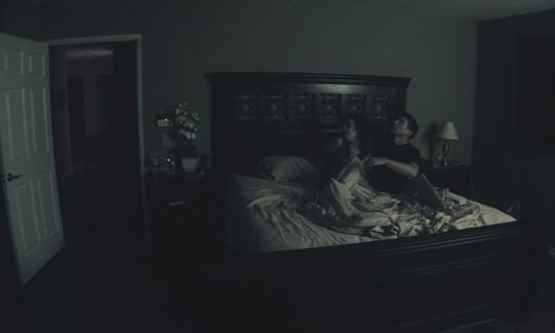
Paranormal Activity has become something of a phenomenon. Filmed for a mere $11,000, it has already earned over $60 million at the box office. Utilizing the “found footage” device that is employed in more and more movies these days, Oren Peli's low-budget horror film manages to deliver a legitimately frightening experience that proves blood, gore, and outrageous special effects aren’t needed if you can do two things right. First, come up with an exciting and (somewhat original) idea. And second, and far more important in this case, execute the hell out it.

This is a tricky movie to review, as so much depends on the film’s slowly unfolding plot that I don’t wish to spoil anything. Suffice to say, Paranormal Activity follows the self-recorded exploits of a young couple in a new home. Katie, played by Katie Featherston, is a graduate student of English. Micah, played by Micah Sloat, is a day trader. When we first meet the still-happy couple, Micah is recording everything with his new toy, a very expensive looking video camera. Like any stereotypical guy with an expensive new toy, Micah is recording constantly; even going so far as to set the camera up on a tripod to record them while they sleep. Why? Because Katie is convinced that she is being haunted, and the possible presence of paranormal activity is matter-of-factly stated right from the opening scene of the film. Micah treats this possible this possibility as a challenge, and as we are introduced to him he is already planning to capture evidence of whatever it is that seems to have found its way into their house. What follows is a series of recording made during a roughly three week period. It’s refreshing that there is no grand explanation, no hoax or trickery. This is a movie about two people being terrorized by something unseen and unknown and it taps into a very basic element of fear that everyone in the audience can identify with. Many of the film’s most frightening scenes occur while Micah and Katie are sleeping, the camera capturing their exposed and prone bodies as things happen around them. This is Paranormal Activity's masterstroke, as after watching it and laying in bed, one can’t help but put themselves in the shoes of Micah or Katie. Everyone goes to bed each night, and thus everyone can relate on some level to the terror that the characters go through.

Now that’s not to say that Paranormal Activity is a non-stop thrill ride of scares and jumps. Sure, there are plenty of genuinely creepy moments early on, but it's really more of a slow burn, with events growing more and more serious as we move towards the climax. More Blair Witch Project than Cloverfield, Paranormal Activity is a refreshing change of pace from the Saw VIs of the world and for that it should be commended. The recent spate of movies parading themselves as “found footage” can hardly be called a surprise, given this country’s increasing obsession with reality television and even social networking tools such as Twitter and Facebook. It seems as though people are more interested in each other than ever before, but only as a pursuit of entertainment. Watching supposed home footage of a haunted young attractive couple certainly qualifies and it will be interesting to see if the trend continues.

Comparison will be drawn to The Blair Witch Project and why shouldn’t they be? Both films utilize the “found footage” gimmick and both were exceedingly small and cheap productions. Peli, who had no previous directing experience, spent the better part of a year remodeling his own house in preparation for filming, which took all of seven days. Only four actors appear on camera, but the focus is entirely on Katie and Micah. As Micah is tasked with operating the camera, Katie spends nearly ever minute of Paranormal Activity’s hour and a half run time on screen. The film would crash and burn if these actors weren’t up for the job, and I’m sure many will doubt these two no-name amateur actors, but I am pleased to report that both Sloat and Featherston do a great job of not only acting terrified, but providing believable, naturalistic performances which greatly add to the pseudo-nonfiction nature of the film. Micah provides more than a few laughs as the headstrong and tech-savvy boyfriend who loves to joke around but also accepts the challenge of protecting his girlfriend, and Katie does good work as the tense and stressed out grad student who tries in vain for some degree of normalcy. Watching Paranormal Activity, it’s easy to forget that these people are in fact actors, and really that’s the greatest compliment one can give a film like this.

Paranormal Activity doesn’t reinvent the genre, nor does it really show us anything we haven’t seen before. However, Oren Peli, with the help of Sloat and Featherston, has crafted a relatively believable and quite frightening film that deserves to be seen. Paramount’s marketing campaign trumpeted this is the “scariest movie in years," and while that’s hardly true, it will assuredly keep you entertained and in suspense right up to the chilling finale. And really, isn’t that the whole point? 4 out of 5 stars.

Monday, August 24, 2009

Quentin Tarantino's Inglourious Basterds (2009)

After countless months of hype, Quentin Tarantino's latest film, Inglourious Basterds has finally been released. Much was made of his promise at last year's Cannes that Inglourious Basterds would be finished in time for this year's edition of the illustrious film festival. Many film critics and insiders scoffed at Tarantino's bold claim, as a movie this epic would surely suffer from the rushed production schedule. Aside from the rather unfortunate Death Proof, Tarantino's record has been flawless. With his most ambitious film yet being rushed through production, can it stay that way? The short answer is yes. Absolutely. Unquestionably.

Set during World War II, Inglourious Basterds tells several seemingly unrelated stories, which in true Tarantino fashion, eventually intertwine and build towards a truly explosive climax. One story, which has been promoted heavily in the trailers, follows the aforementioned basterds, a group of Jewish-American soldiers dropped behind enemy lines in Nazi-occupied France to spread fear throughout the Third Reich by scalping and brutally killing as many Nazis as possible. They are led by Lt. Aldo Raine, portrayed with a wonderfully bizarre hillbilly accent by Brad Pitt. From the trailers and TV spots, one might presume that the film is all about their gruesome exploits as they stomp around the French countryside, wreaking havoc on any Nazis that cross their path. While the film does have its share of horrific violence, nothing could be further from the truth when it comes to the majority of Inglourious Basterds. In fact, the basterds only occupy perhaps a third of the film's running time, the remainder of which is dominated by two opposing figures. Destined to be remembered as one of the great screen villains is Nazi Col. Hans Landa, nicknamed "The Jew Hunter" for his uncanny ability to sniff out hiding Jews throughout France. Landa is played by veteran Austrian actor Christoph Waltz and his performance is riveting. Then there is Shosanna, a young French-Jewish woman who, having escaped Landa's clutches, opens a cinema in Paris, where she soon begins to plot her revenge. Played by the relatively unknown French actress Melanie Laurent, Shosanna forms the heart of the film and it is she whom the audience can most identify with over the course of the film. As the individual plot lines all begin to converge, we are treated to one of the single most satisfying endings in recent film history, with the basterds, Shosanna, Col. Landa, and the Third Reich's high command all getting in on the action.

I've touched briefly on some of the performances in Inglourious Basterds, but the uniformly excellent acting throughout the film really warrants its very own discussion. Much has been made of Christoph Waltz's performance as Col. Hans Landa and each bit of praise is well-deserved for what is undoubtedly one of the great villainous turns in recent memory. Waltz creates a rich character who is far from the usual Nazi caricature. He is funny, charming, and polite one minute and cruel and frightening the next, and Waltz's innumerable facial expressions in particular help to create his charming monster of a character. Waltz was awarded the best actor prize at Cannes and I fully expect an Oscar nomination and possibly a win for his role as the gleefully brilliant "Jew Hunter". Similarly, Melanie Laurent's turn as Shosanna is another fantastic performance by a relatively unknown performer. Laurent at once captures the vulnerability, determination, and tragic existence of Shosanna and I can only hope that American audiences will see more of both of these very capable actors in the near future. Tarantino's insistence on casting a Frenchwoman to play a Frenchwoman, an Austrian to play a German (close enough) and so on, was a very welcome change after so many mediocre and unconvincing attempts by Americans at playing foreign-speaking roles (Tom Cruise as a Nazi anyone?).

With Shosanna's storyline serving as the heart of the film and the most gravely serious, and while Col. Landa provides his fair share of chuckles, the funniest role in the film is played by our very own American movie star, Brad Pitt. With Lt. Aldo Raine (an obvious nod to actor Aldo Ray), a.k.a. Aldo the Apache, Pitt has a ball, spouting hilarious one-liners in his indescribable hillbilly accent. He manages to be both funny and threatening and although he provides the lion's share of the film's comedy (which is surprisingly plentiful), he is also a bloodthirsty cold-hearted bastard. Or is it basterd? Pitt long ago came to be one of my favorites due to his versatility and taste in projects and Aldo the Apache is another feather in the actor's quite full cap. The rest of the basterds are little more than periphery supporting characters, save for Sergeants Donnie Donowitz and Hugo Stiglitz, riotously played by Eli Roth and Til Schweiger, respectively. I was quite dubious of Roth as an actor prior to his role as "The Bear Jew", but he really knocks it out of the park. It's plain to see that Roth is having a blast as he bashes and shoots every Nazi in sight. As for Sgt. Hugo Stiglitz, Schweiger provides some of the biggest laughs in the film while also portraying the most intimidating and serious of the basterds. Both characters could easily warrant their own films, as could Pitt's Aldo Raine and Michael Fassbender's suave Archie Hicox, who completely owns what is perhaps the film's best scene. As a matter of fact, one could make an argument for nearly every character in the film having their own movie, so richly written and portrayed are the characters of Inglourious Basterds. It is a testament to Tarantino's utterly spellbinding writing and the amazing cast that my only real complaint is wanting more time with the many characters that fill the movie's two and a half hour run time. This is easily the best ensemble performance of the year, a feat I highly doubt will be surpassed in the months to come.

Even with all of the amazing performances, Quentin Tarantino is the true star of Inglourious Basterds. This is a sprawling, epic period-piece, a genre that no one would associate with Tarantino, the master of hit men and diner discussions. Not any more. Tarantino effortlessly juggles the several different story lines, delivered in chapter form reminiscent of Pulp Fiction, while also jumping from English to French to German and back more times than one can count. His trademark dialogue is more restrained than ever before, with not a single word wasted, and the result is a wonderfully tight screenplay that goes places no one would ever expect. True to form, much of Inglourious Basterds is taken up by conversations, with the mayhem and murder relegated to a supporting role in favor of Tarantino's pitch-perfect dialogue. Of special note is a twenty-minute tavern scene which begins as a simple conversation and evolves into much, much more. As with every Tarantino film, Inglourious Basterds is nearly perfect in a technical sense. The cinematography is beautiful, with many shots recalling Sergio Leone's spaghetti westerns of the past. Speaking of Leone, legendary composer Ennio Morricone even supplied the score for the film, and although it isn't original due to the time constraints involved, the music fits the film perfectly, providing a haunting and beautiful accompaniment to the actions on-screen.

Although it is a WWII epic, Inglourious Basterds also serves as Tarantino's love letter to the world of cinema. The unforgettable climax takes place in a theatre and Tarantino manages to weave several film discussions into the screenplay, as well as an ingenious reference to King Kong. Indeed, one of the most pivotal moments of the entire film is caused by the effect that movies can have on us, but to say anymore regarding that scene would be criminal. Inglourious Basterds has a little bit of everything and one would be best served to see it with no expectations. This is not a personal men-on-a-mission action film, nor is it a standard World War II epic. Instead Tarantino has created his very own monster of a war movie, a film bearing his unique stamp. A film that no other director would ever be crazy enough to try and duplicate. While Reservoir Dogs and Pulp Fiction spawned a slew of countless imitations, I doubt that will be the case this time around. Just as with those films, Tarantino has managed to create something wholly original, all while borrowing from the best of past genre classics. The only difference is that this is a World War II movie, and it is only Tarantino's unique artistic vision and nearly unmatched directorial skill that allows him to so greatly succeed with such a bizarre mishmash of concepts and ideas. Inglourious Basterds is a towering achievement that stands beside Pulp Fiction and Jackie Brown as the best work Quentin Tarantino has ever done. A nearly perfect film and easily the most fun I've had at the cinema this year. Bravo Mr. Tarantino. 5 out of 5 stars.

Thursday, August 20, 2009

Neill Blomkamp's District 9 (2009)

Science fiction tends to come in two distinct flavors -- the quiet, speculative, often mind-bending variety, such as 2001, Moon, and even Alien, and the much louder, effects-filled epics replete with the necessary levels of lasers and carnage. If you are wondering which category District 9 falls into, let me just say that there are a lot of lasers, and a lot, I mean a lot, of carnage. The film's excellent marketing campaign managed to keep people in the dark regarding the true nature of the plot of District 9 and I will attempt to do this same during the course of this review. This is a film that should be seen with as little prior knowledge as possible, as the impact of certain events is an experience one won't want to be cheated out of beforehand.

The first act of District 9 is comprised entirely of pseudo-documentary footage as we are introduced to an alternate reality where, in the late 1970s, a huge hulking and decrepit alien ship appeared hovering over Johannesburg, South Africa. The aliens, all two million of them, are promptly deposited in "District 9", a huge, guarded slum where they live in squalor. Tension is high among the human population, and most humans employ the derogatory term "prawn" when speaking of the aliens. The parallels to apartheid are quite obvious, yet the sheer originality of Blomkamp's vision produces a rather poignant look at the racism and discrimination that still dominates many areas of the globe. A private security firm, MNU, which specializes in weapons research, is brought in to manage "District 9". It's not hard to see why MNU would be interested, as the alien species possesses the most advanced weaponry on the planet. Once the stage has been properly set, we are introduced to Wikus van der Merwe (played by newcomer Sharlto Copley), an MNU field operative assigned with the task of the heading an operation to relocate the nearly 2 million aliens to a new "District 10" camp located 200 miles from Johannesburg. To say any more would be to spoil the many twists and turns of Blomkamp's screenplay. I was thrilled at the direction the film eventually takes -- the less one knows, the better.

Along with the great premise, there are two main reasons why District 9 succeeds so well, and yes, the film as a whole is a rousing success, and certainly the best science fiction film since Children of Men. The first, and in my mind, most important, is the central performance by Sharlto Copley. It's a great performance until you realize that Copley has never acted before ... ever. What was at first a great performance is all of a sudden a sensational turn, the excellence of which holds the film together throughout. The character of Wikus van der Merwe is no hero, but instead a very flawed individual who continually operates only in his self-interest, and yet the audience is still able to identify with, and root for Wikus despite his obvious character defects. This is a testament to the power of Copley's performance and it really does hold the entire film together.

The most discussed aspect of District 9 will no doubt be the action and special effects. I honestly have no clue how Neill Blomkamp and Peter Jackson were able to make this film for the reported $30 million as it honestly looks as though it cost four times that amount. Michael Bay, take note. The alien effects are totally believable and as they are immediately thrust in front of the audience, they soon come to be just another part of the background. The audience accepts the aliens as aliens, when in fact we know they are just CGI. They aren't even there to begin with. However, the excellent creature design and spot-on CGI allows the audience to suspend their disbelief and really immerse themselves in the events and actions that follow. And when the action finally does start, it does not disappoint. The alien technology gives Blomkamp license to create some awe-inspiring action sequences, complete with armored mechs and exploding bodies. Yes, this is definitely not a film for the kiddies. The second half of the film definitely has a much different tone than the first, as guns and explosions take precedent over back story and character development. Whether one view this as a positive or a negative is entirely up to the viewer. Personally, I didn't have a problem with the eruption of violence and gore, but I'm sure some will wish the film had a less violent and conventional conclusion.

Neill Blomkamp has made a rather remarkable film in District 9. With Sharlto Copley delivering one of the year's stand-out performances, a bevy of excellent and believable special effects, and an original and well-executed premise, I have no problem calling District 9 one of the best films of the year. 4.5 out of 5 stars.

Friday, August 14, 2009

Kathryn Bigelow's The Hurt Locker (2009)

This is a movie that will blow you away. Yes, that was an awful pun, but it's also true. The Hurt Locker is a masterpiece and one of the greatest war films ever made. As bold as it initially may seem, I have no problem making that statement. This film will go down in history with Platoon, Apocalypse Now, The Thin Red Line, and a few others as absolute classics of the genre. Kathryn Bigelow has long been an accomplished and respected action director, the rare woman in a genre dominated by men, and she has proven again and again that she can deliver as much or more than the rest of Hollywood. Now with The Hurt Locker, Bigelow has raised the bar considerably.

The Hurt Locker follows the daily grind of a three-man bomb-disposal team in Iraq sometime in 2004. Jeremy Renner, in a star-making performance if there ever was one, stars as Staff Sergeant William James, a brilliant but reckless bomb disposal technician whose convention-defying tactics are a constant source of exasperation for Sergeant JT Sanborn, played by the excellent Anthony Mackie, and Specialist Owen Eldridge, portrayed with a great mix of bravado and vulnerability by Brian Geraghty. Astute film goers may recognize Renner, and perhaps even Mackie, but make no mistake, these are three relatively unknown leads and the film's rough realistic approach benefits greatly from the lack of star power. I have long been a fan of Jeremy Renner, particularly his work in The Assassination of Jesse James and 28 Weeks Later, and in some ways he builds on his persona from the latter film while also introducing a great deal of humanity to the role. This is a man who is so good at what he does, so confident in his skills in these terrifying life-threatening situations, that he doesn't bother to think of his teammates at all, instead focusing everything he has on the explosive task at hand. As you may imagine, this doesn't go over too well with his new teammates, and the constant battles between Renner and Mackie are just as intense as any explosion or gunfight. Speaking of Anthony Mackie, he delivers a performance to match that of Renner, crafting an extremely believable portrait of a man living and working on the edge, and fighting every day to get himself and his team through to the end of the day. Both performances are truly remarkable and completely deserving of Oscar nominations, although I fear they may be lost in the shuffle when awards season rolls around. There is also a trio of excellent cameos by Guy Pierce, Ralph Fiennes, and David Morse, with each actor creating a lasting impression in his brief amount of screen time.

Unlike many of the more famous war films, The Hurt Locker is a relatively small picture. There are no operatic sweeping shots of epic battles. In fact, there really aren't any epic battles at all. Bigelow is more concerned with the stories of the men on the ground and the toll such a job takes on the men who put their lives in danger on a daily basis. As such, Bigelow smartly focuses on the way the three primary characters feel and interact with each other, both on and off the battlefield. This is the heart of the story, as the film would collapse under its own weight with a trio of less capable leads. Each morning when the team goes out on another bomb call, we are shown the amount of days left in the current deployment. This serves as a sort of deadly and exhausting reminder that, even with the successful diffusion of another bomb, there are still plenty of days and chances left to die in the desert sun.

The bomb disposal scenes themselves are astoundingly tense. The film is filled with several unbelievable set-pieces which find James, Sanborn, and Eldridge in the middle of a barren Iraqi street, the two men nervously scanning the many windows and alleyways as James attempts to disarm enough explosives to level a city block. The variety and execution of these scenes is nothing short of a triumph and, with the exception of one amazing slow motion shot, the film is a toned-down affair compared to some of Bigelow's past work (Point Break -- I'm looking at you). This down-and-dirty, realistic approach extends to the film's camera work, which captures the look and feel almost of a documentary, as the sandy brown streets and hot sun-bleached sky make you feel like you are right there, risking your life alongside James and Sanborn.

It should also be noted that, although The Hurt Locker is an Iraq War film, it never once politicizes the war. Instead, Bigelow opts to keep her opinion of the war to herself, instead simply showing the men (there are barely any women among the cast) on both sides doing what they need to do and what they believe is right. The film never renders an opinion, never unnecessarily vilifies the insurgents, and never devolves into flag-waving glorification. The Hurt Locker simply shows the sweat, blood, and tears that every man experiences on the battlefield. Kathryn Bigelow, with considerable help from the amazing cast, has crafted an action-filled war film that is in essence a character study. There are no deep questions to ponder, no political agenda to decipher, there is just a simple story of three men, living and working together, all while trying to stay alive to work another day. Bigelow's more than capable direction, perhaps the two best performances of the year, and some of the most riveting action scenes ever filmed all add up to make The Hurt Locker the best film of 2009 so far. This is a perfect movie. 5 out of 5 stars.

Saturday, August 8, 2009

Judd Apatow's Funny People (2009)

Chances are if you've watched a comedy from the past five years, Judd Apatow had a hand in it. The man has been everywhere. Anchorman, Talladega Nights, Superbad, Step Brothers, Pineapple Express ... the list goes on and on. What many people don't realize however, is that Funny People is only Apatow's third time sitting in the director's chair. In 2005, he released The 40 Year Old Virgin. 2007 gave us Knocked up. Now, two years later, Apatow has unleashed his most mature and intelligent film yet, filled with genuine drama to go with the dozens of dick jokes. Funny People tells the story of George Simmons (Adam Sandler like you've never seen him before), a hugely successful comedian who parlayed his fame into a career of crappy dumb comedies and a mansion on the water in Malibu. The ever-present Seth Rogen plays the much less successful Ira, a struggling stand-up comedian who worships Simmons and is thrilled when he gets the chance to be his personal assistant. George has been diagnosed with a rare form of leukemia and the prognosis is not good. With Ira in tow, he hits the stand-up circuit again, with an eye on recapturing his old flame, the proverbial one-that-got-away, played by the wonderful Leslie Mann. What follows is the story of two men's often difficult relationship with each other and one's man's quest to resurrect the dead relationship of his past.

Sound like a comedy yet? And while Apatow's script deals with some very serious issues, some of which are unexplored territory in the comedy genre, his preternatural ability to strike the perfect balance between plot and comedy ensures that Funny People never turns into a corny rom-com. These are very real, very flawed people, and many of the funniest bits come from the several stand-up scenes scattered throughout the film. Apatow has stated that he always tries to begin with a good story first and add the comedy second. With Funny People, Apatow has created a near-perfect marriage of drama and comedy as he sets a very serious story in the world of comedians and comics. Now that's not to say that one should go into the theater expecting a high-brow comedy like Fargo or The Royal Tenenbaums. This is a movie starring Adam Sandler and Seth Rogen, after all. Funny People is filled to the brim with cursing and bathroom humor, just as all of Apatow's films are, and while it may not be quite as hilarious as The 40 Year Old Virgin or Knocked Up, Funny People definitely represents the maturation, and thus-far culmination, of Apatow's considerable talents as a filmmaker.

Along with another excellent script from Apatow, the real story of Funny People is the staggeringly good cast, with seemingly everyone in Hollywood stopping by for a scene or two. Adam Sandler is absolutely excellent as the depressed and lonely George. From that description you might think that Sandler plays him as a one-note character, content to paint his downcast attitude in broad, easy strokes. Instead, this is perhaps the best performance of Sandler's career, and certainly the most effective. Sandler doesn't try and mine the character for pity and sympathy, instead crafting a believable portrait of a self-centered, rather unpleasant millionaire comedian who the audience still manages to identify and empathize with. Rogen, I must say, is still playing a variation of his typical everyman protagonist role, but for some reason, I find his work in this film to be a step up from his roles in the past. There is just more depth here, and like Sandler, Rogen is able to craft a flawed and believable character that audiences won't feel like they've seen a thousand times before. Rogen has been playing these characters for a while now, and the role suits him well. Both Sandler and Rogen are hysterically funny at times, with some of the films' best moments coming during Rogen's stand-up scenes. Jason Schwartzman and Jonah Hill also do great work as Ira's more succesful roommates and Eric Bana shows off his long dormant comedy skills as the wandering husband of Leslie Mann's character. Mann is just great in the role, and Apatow films her in a way only a loving husband could, with every shot lovingly lingering on his admittedly beautiful wife. Apatow's two adorable daughters also return from Knocked Up, and their chemistry with Mann is an obvious and welcome addition. The film is also littered with celebrity cameos with everyone from Norm MacDonald to Ray Romano to a very funny Eminem making an appearance. The comedy zones of Hollywood are fully explored over the course of Funny People's running time, and the audience is better off for it.

With Funny People, Judd Apatow has crafted his warmest and most intelligent film yet, filled with great performances from a fine cast, a heartfelt story you actually care about, and more penis jokes than you can shake a ... stick at. With each of his three films, Apatow has demonstrated a more refined and mature approach and Funny People is the crowning achievement of his career. With Funny People he has shown himself to be a true filmmaker. 4.5 out of 5 stars.

Thursday, July 16, 2009

Duncan Jones' Moon (2009)

It's a difficult task to review a movie such as Moon, the first directorial effort from young Duncan Jones (formerly known as Zowie Bowie). The obvious parallels to 2001 aside, Moon is the kind of smart and quiet little film that you never saw coming, but ultimately ends up as one of your favorites of the year, if for no other reason than the sheer inventiveness and audacity of Jones' vision. That being said I must caution that those expecting a mind-bending science fiction tale on par with Kubrick's masterpiece may be disappointed. Moon is a character piece and it never once forgets this.

Sam Rockwell is tasked with carrying the entire film, as the only other human characters appear via video screen. Kevin Spacey lends his voice to GERTY, the Hal-inspired robot companion to Rockwell's Sam Bell. It is an interesting choice, given Spacey's cold and slightly creepy voice, but the film is not interested in replaying the robot gone bad storyline of 2001. Instead, working from Duncan's own original story and a fine screenplay crafted by Nathan Parker, Moon sets out to tell the story of a lone worker on the moon, given a three year contract and tasked with harvesting a newly discovered resource on the moon's surface. When we first meet Sam Bell, he has only three weeks left before his contract is finished and he can finally return to his wife and daughter on earth. Sam begins to get sick and one day, while checking on a distant outpost, makes a discovery which will change everything. To say anything more about the story would be a great disservice to those yet to see the film. Suffice it to say, not all is as it appears on the moon.

Rockwell is utterly fantastic in a role that requires some serious range and I never once grew tired of his constant presence on screen. Supposedly, Jones wrote the story with Rockwell in mind for the lead, and his vision payed off as Rockwell delivers one of the best performances of the year. In a perfect world, Rockwell would be nominated for an Oscar for his work here, but I'm not holding my breath. The other star of the show is the set design. This is not the sterile, clinical environment we saw in 2001, or even Alien. Instead we are shown a moon base which looks real. That is to say, it looks lived in. It's not hard to imagine Sam Bell spending time in his quarters as it looks less like a movie set, and more like a practical imagining of one man's life ... on the moon. The audience is not bashed over the head with overt displays of technological wizardry. The moon base and it's tools are suitably advanced but never overwhelm the story and character work. It must be noted that Moon was filmed with a budget of $5 million, an absolutely microscopic number in this day and age. It is a testament to Jones and his talented crew that the audience is never once sucked out of the experience by a shoddy effects shot or blatant green screening. Instead, they had to get creative with their sets and props, a difficult trick to pull off when your setting is the moon. This creativity is on display throughout Moon, whether it be the set design, acting (you'll see what I mean), cinematography, or the story itself of Jones' directorial debut. A creative, thoughtful science fiction film. Imagine that. 4 out of 5 stars.

Monday, July 13, 2009

Michael Mann's Public Enemies (2009)

Continuing in the tradition of such films as Heat and Miami Vice, Michael Mann's latest entry into the crime drama canon is Public Enemies, the story of John Dillinger. Perhaps a chapter of the story of John Dillinger would be a more appropriate description. Mann takes an interesting approach to the material, opting to show only the final year of Dillinger's life. This is not an origin story, instead it is a window into the world of a man who robs banks. Melvin Purvis, the FBI man tasked with tracking Dillinger down, is also a key figure, however neither figure is fully explored, although the primary actors do a fine job of bringing the characters to life.

Depp plays Dillinger with a quiet, almost steely, reserve which seems appropriate but also prevents the audience from really coming to understand the motivations that drive his character. Dillinger robs banks. We are never told why he chose this life. Mann asks us simply to accept Dillinger for what he is, a very slick, well-dressed, bank robber. Melvin Purvis, portrayed by Christian Bale, is given even less to work with as we see little character development between the two leads. Purvis is a career FBI man, and he will stop at nothing to catch Dillinger. Bale does a great job with the material he's given, but I couldn't help wishing that both he and Depp were given more time to develop their on-screen identities. Although the film was billed as a showdown between Depp and Bale, the character of Billie Frechette, played by Marion Cotillard, is arguably the most important character of all. In the midst of the cat-and-mouse game between Dillinger and Purvis, Frechette is discovered by a smitten Dillinger and the story of their doomed love affair is given just as much screen time as the Purvis storyline. Cotillard does a good job, although she is never given anything to do besides being the requisite damsel in distress. The supporting cast is absolutely crammed full of top-flight actors with everyone from Billy Crudup to Stephen Graham getting in on the action and although none are given much screen time, they are all welcome additions to Mann's latest crime saga.

Despite the fantastic cast, the real intriguing aspect of Public Enemies is the cinematography. Mann chose to shoot entirely with HD cameras, which he also employed in 2005's Collateral. However, as Public Enemies takes place in the 1930s, it is an interesting choice, to say the least. Much of the filming alternates between hand-held cameras and traditional shots and the picture clarity is stunning. The camera often perches just over the shoulder of Dillinger, giving the audience a close-up third-person perspective, which combined with the HD picture can give the impression of a documentary. I'm not sure if this is what Mann was intending, but given the subject matter, I think it's a successful technique which helps to differentiate the film from the millions of other gangster movies. The viewer often gets the impression that they are simply in the room with Dillinger and his men, as the hand-held cameras jostle about as men load their tommy guns and slip on their jackets. While I may have preferred a classically shot film in the vein of The Assassination of Jesse James, I can certainly appreciate the distinctive look and feel of Mann's 1930s Chicago. Public Enemies also benefits from the filming locations, as many of the banks Dillinger actually robbed were used in the film.

Michael Mann has created another film which fits solidly amongst his other work. His art house style tales of distant criminals living in their own self-created worlds can be hard to execute while still managing to captivate an audience. Mann, however, has this down to a science. Public Enemies is a worthy addition to his canon of crime, although I'm still waiting for him to match the perfection of Heat. While this film falls far short of the standard set by DeNiro and Pacino's epic crime story, Public Enemies still provides a great cast, solid acting, a unique and visually stimulating look, and some of the best gunfights in years. Those looking for something more, however, may leave the theater a tad disappointed. This is not an exploration of the character and motivations of John Dillinger. It is simply the story of a man who robbed banks. 4 out of 5 stars.

Wednesday, June 3, 2009

Pete Docter and Bob Peterson's Up (2009)

Pixar strikes again. I'll take the suspense out of it -- Up is the best movie of 2009 thus far. Pete Docter and Bob Peterson have crafted a funny, moving, and poignant film filled with genuine excitement and characters that you will absolutely fall in love with. This is a very unconventional story that never once wobbles under the weight of such a bizarre and wondrous premise. Indeed, Up is a wonderful example of classic storytelling fused with the new and exciting.

The film begins with a breathtaking sequence detailing how two young children with a shared love for adventure meet. We see them fall in love and get married. We see them experience all that comes with a shared life together, both the good and the bad. We see them grow old together and as this bravura sequence comes to a close, we see one of them succumb to old age. It is a beautiful and heartbreaking way to start the film and guarantees that the audience Will be totally emotionally invested in what's to come. When the time comes for Carl Fredricksen, wonderfully brought to life by Ed Asner, to set sail in his balloon-powered home it is all too easy to empathize with the seemingly crotchety old man. This is emotional storytelling at it's best. The fact that such emotion can be so perfectly conveyed by computer animation is not surprising, given Pixar's other recent films, but it should still be celebrated.

I viewed Up in 3D and the effect was astounding. The depth of field, vibrant colors, and lush jungle setting all help to contribute to the film's stunning visual look. That said, if you don't get the chance to see Up in 3D, don't fret, as it will still look fantastic. It's quite refreshing to see an animated movie with elderly folks as both protagonist and antagonist. This is still a film aimed partly at children and Carl does share the screen with Russell, an excitable young boy scout. However, in a nice change of pace, young Russell isn't smarter than his geriatric counterparts, and nor should he be. The three human characters also share the screen with the oddly-named Kevin, the elusive giant bird which the deranged Charles Muntz has chased for so many years. Muntz employs a host of talking dogs in his hunt for the exotic bird. One dog stands above the rest, although not literally, and his name is Dug. Dug is an amazing creation which you will instantly fall in love with and it doesn't hurt that he's the source of many of Up's funniest moments.

Last year brought us Wall-E, which tackled such weighty issues as environmentalism and the human race's increasingly selfish and sloven behaviour, and Up handles a different set of equally adult themes. Up covers such themes as growing old, lost love, and accepting death, with an uncommon amount of grace and candor while still remaining very kid-friendly. Up is nothing less than a classic film which may stand the test of time better than any Pixar film, Wall-E included. Those who look at Up and dismiss it as just another animated kids movie are missing one of the most heartfelt, touching, humorous, and exciting films of the past several years. 5 out of 5 stars.

Guy Ritchie's Revolver (2005)

Revolver was released in the U.K. in 2005, but wasn't released in the U.S. until 2007. This is never a good sign. After a career spent directing comedic mobster tales, Guy Ritchie decided to take a chance and alter his tried and true formula. With a nice cast of actors and an admittedly intriguing premise, Revolver had a chance to be a decent film, which is too bad, as the result is a complete mess.


Jason Statham stars as Jake Green, a gambler and con man who has knowledge of a formula which guarantees success if executed properly. Statham is fine in the role, but his work doesn't quite match that in Snatch or Lock, Stock, and Two Smoking Barrels. I must say that it is refreshing to see Statham putting his thespian skills to use after the past five years spent delivering roundhouse kicks to faceless thugs. Mark Strong turns in a memorable performance as a nervous assassin, but the rest of the performances range from forgettable to downright awful. Andre Benjamin aka Outkast's Andre 3000 and Vincent Pastore manage to bring absolutely nothing to the table as a pair of mysterious loan-sharks. It is a mystery to me why Benjamin continues to receive roles in mainstream film. The man has zero screen presence and can be counted on to deliver a one-note performance consistently. More problematic still, is Ray Liotta as a corrupt casino owner. Liotta has proven to be a great actor in the past, which is why it's so frustrating when he turns in such an abysmal performance. He spends the majority of the film stomping around in thong underwear while barking commands at weary underlings. It is literally a carbon copy of any number of awful performances Liotta has given in the past five years. Apparently, monstrous over-acting is par for the course at this stage of Liotta's career.


As hard as it may seem to believe, the script and direction fare far worse than the acting in Revolver. I applaud Guy Ritchie for leaving his comfort zone, I really do. Suffice to say, he probably should have stayed there. Revolver is Ritchie's attempt at a serious film and nearly all of the trademark elements of his films are missing. No black comedy, no razor sharp wit, no likable yet bumbling criminals just trying to survive the gangster underworld. These are the elements that made his films a success and when removed, we are left with an incoherent mess full of supposed psychological twists and turns which are impossible to decipher and ever more impossible to enjoy. Indeed, Ritchie piles on so many different twists and cons and themes that it is impossible for the viewer not to be completely lost by the time the film ends. He attempts to craft a tricky and intelligent thriller about the human ego and the shifty world of con men but instead creates a pretentious maze of a film with zero intellectual impact. It doesn't help that several characters often repeat completely inane rules of the supposed con as if nothing smarter has ever been uttered. "You can only get smarter by playing a smarter opponent," and "The more sophisticated the game, the more sophisticated the opponent," are two of my favorites. Does this really pass for intellect?


Revolver is peppered with several gaping plot holes, which when explored, negate the premise of the entire film. Obviously, this is never a good thing. Ritchie often indulges in pure stylistic excess such as an abrupt switch to cel-shaded animation in the middle of an action scene or foreign-speaking characters eventually speaking only with subtitles as the dialogue track is eventually replaced by blaring music. These scenes, and others like them, convey a lack of focus which is prevalent throughout the film, even though one must be absolutely focused to the screen if they are to understand Ritchie's intent. This is not a good combination. There is also a third-act twist which is completely obvious twenty minutes into the film yet is delivered as though Ritchie is confident that his audience is completely in the dark. I'd be remiss if I didn't mention that there are a few good scenes scattered haphazardly throughout the film, but sadly these are few and far between and just serve to remind us that Guy Ritchie is capable of much, much more. When the credits mercifully roll, Guy Ritchie has managed to both underestimate and overestimate his audience and the result is a complete mess of a movie filled to the brim with mediocre acting, extremely confusing plotting, and average directing. This is not a good film. 1 out of 5 stars.

Wednesday, May 27, 2009

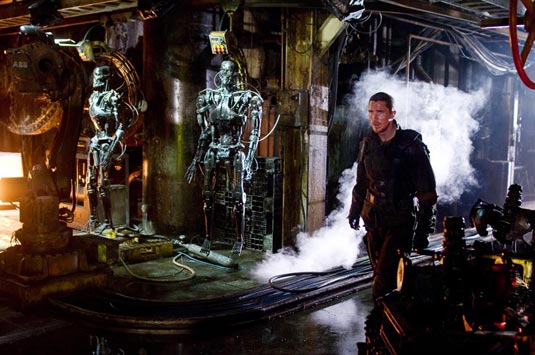
McG's Terminator: Salvation (2009)


For many action fans, the first two Terminator films remain the gold standard of action-oriented science fiction. Terminator 3: Rise of the Machines, on the other hand, was an unfortunate money-making exercise which is best forgotten. Which brings us to the fourth film in the franchise, Terminator: Salvation. Are McG and Christian Bale able to recapture the glory of the original and its sequel, or is it closer in quality to the awful Rise of the Machines?

Terminator: Salvation is set in the year 2018, allowing us to finally see the war between humanity and Skynet. Right? Well, not exactly. Instead, the film shows the opening act of the war, serving as a prelude to the all out war glimpsed at the beginning of Terminator 2. This is a mistake, as fans have been clamoring to see the war for years. That said, there is still a story to be told here. But is that story any good? Unfortunately, the answer to that question is a resounding "No".

The main problem is that John Conner, as played by Christian Bale, is not the main character of this film. Instead the character with the most screen time is Marcus, a death row inmate who wakes up 15 years after his execution to find that the world has been taken over by machines. How this mysterious interloper comes in to play is best left a secret. And it would be a pretty good secret, if not for the fact that every single trailer and preview spoils it immediately. Marcus is played by Sam Worthington, the supposed next big thing who will also be seen in James Cameron's Avatar later this year. Worthington does a decent job, managing to convey the humanity and toughness required, but he fails to leave much of an impression when all is said and done. Incredibly, the same can be said of Christian Bale as the leader of the resistance, John Conner. It's not that Bale is terrible in the role, just that he isn't given much to do outside of scream, fire automatic weaponry, and bark orders in his unfortunate Batman rasp. This is mainly the fault of the script, which was supposedly rushed into production due to the writer's strike, and I have no doubt that Bale can prove to be a fantastic Conner if given a proper story arc in the already announced sequel. Anton Yelchin does a great job as a teenage Kyle Reese, bringing the right mixture of vulnerability and aggression to the character originally portrayed by Michael Biehn. The rest of the cast is filled with solid actors, however they are all wasted in nothing bit parts and thus not really worthy of discussion.

Overall the acting is very spotty, which may be due more to a weak script than anything. And boy, I am not kidding about the weak script. When the film ends, you realize that the story was in fact superfluous. It didn't even need to be told. As far as I'm concerned, we could have skipped right to the events of Terminator 5. Yes, McG can direct action and he can direct it well. The numerous action sequences are all quite exceptional and really the film's lone saving grace. There are corny moments, choppy cuts, and plot holes galore and it's clear that McG, while he had good intentions, just doesn't have the directing chops to handle a film which needs equal measures of action and heart. Another problem is the relative lack of terminators, which is puzzling given the name of the franchise. The majority of the machines are large monstrosities that seem as though they were created at random, perhaps due to the recent success of films such as Transformers. I think I speak for everyone when I say, "More terminators please."

This review has been almost entirely negative, and much of this is due to the unfair expectation that I, and many others, heaped upon the film before it had even gone into production. The bottom line is that it's a middling effort with fantastic action and little else. There's plenty of promise displayed on screen, from Bale and Yelchin to McG's undeniable eye for visuals, all of which make it even harder to admit that Terminator: Salvation is the first big disappointment of the summer season. Here's hoping that the sequel will benefit from a much better screenplay and a tighter focus. It's not rocket science. Give the people what they want -- John Conner kicking ass in an all-out war with Skynet and the machines. If you're thinking about seeing Terminator: Salvation in theaters, do yourself a favor and see Star Trek instead. Maybe McG, Bale, and Co. should do the same. 2.5 out of 5 stars.

Tuesday, May 12, 2009

J.J. Abrams' Star Trek (2009)


I have a confession to make. Growing up, I was a Star Wars kid. Star Wars was filled to the brim with accessible action, good vs. evil elements, and cool looking aliens that instantly attracted me to the trilogy of films. I never really gave Star Trek a chance. I knew that there was plenty to like about the other sci-fi phenomenon, but I was too busy with Luke, Leia, and Han to really give a damn about a bunch of squares in tight shirts. Indeed, Star Wars was my holy grail of sci-fi cinema ... until 1999. As we all know, the prequel trilogy was terrible. Great special effects and action were weighed down by awful acting and even worse writing. Star Wars had been turned into a low-rent space opera. George Lucas tried to make a shiny new addition to the franchise while keeping the core concepts and spark of his original films, but failed miserably. If he ever decides to give it another shot, his first order of business should be to call J.J. Abrams.

Abrams' resume as a director is a bit thin, but in a short amount of time he has shown a creative flair nearly unrivaled in Hollywood today. We all know about the television sensation Lost, but to me, the real precursor to Abrams' work on Star Trek was Mission: Impossible III. Abrams took a moribund franchise that was basically on life-support and breathed new life into it with startling efficiency. The film was well constructed and full of excellent and creative action sequences which seemed to arise relatively naturally for such a film. Despite its reported budget of $150 million, this reboot of Star Trek feels much the same way. The Phantom Menace, this is not.

The film opens with a breathtaking sequence in which a monstrous mining vessel attacks a lone Starfleet ship. It is the setting for the birth of James T. Kirk and is marvelously effective, not only at introducing us to this newly re-imagined universe, but at setting a tone for the two hours that follow. This is a character-driven film, despite all of the great effects and action. I'd heard that Star Trek was more character-driven than Star Wars. Now, I can see why. What follows is a funny, exciting, emotional, and wondrous tale of the origins of Kirk, Spock, and the U.S.S. Enterprise and her crew. The film is accessible to newbies like me, while retaining all of the elements that endeared the original franchise to fans all over the world. Chris Pine and Zachary Quinto star as Kirk and Spock, respectively, and each actor knocks it out of the park. My only previous experience with Pine was as a raving neo-Nazi in the awful Smokin' Aces, but any doubts I had were quickly erased as he exhibits just the right amount of swagger, courage, and humor needed to portray an immensely likable hero. Quinto is also excellent as Spock. His performance conveys a wisdom which seems to elevate him above the oftentimes chaotic events and characters that surround him. It also helps that he looks the part. Indeed, the audience will even get a chance to compare him to the original Spock, Leonard Nimoy.

The rest of the cast is great as well, although since this is really the origin story of Kirk and Spock, the supporting cast doesn't get all that much to do. Still, it is worth mentioning Karl Urban as Bones McCoy and Bruce Greenwood as Captain Pike as both actors turn in performances that leave you wishing they had more screen time. Eric Bana is tasked with playing the villain, Nero, and it is an interesting role. This is not an evil genius out to conquer the galaxy. He is not motivated by greed or thoughts of galactic domination. No, he is just a miner, albeit a very angry and homicidal miner who has come from the future. Nero provides a very believable threat to Starfleet and our heroes and Bana acquits himself well in a rare chance to play the bad guy.

There is plenty of action, more than I anticipated in fact, and the visual effects are stunning. Many of the action sequences even manage to include some subtle nods to the importance of science in the Star Trek universe, such as the dead silence of space during an explosion-filled battle. Although I don't have a history with the franchise, I get the feeling this is how Star Trek is meant to be. Grandiose spectacle with some science to back it up. Thrilling action with characters the audience actually cares about. And somewhat of a surprise to me -- a healthy dose of humor, as well. A sequel has already been announced and I'm not surprised. Star Trek plays like the opening act in what should be a very satisfying series of films. As a fan of not just science fiction, but movies in general, I can only hope that this rebooted Star Trek franchise will "live long and prosper." Judging by the quality of this film, that shouldn't be a problem. 4.5 out of 5 stars.

Sunday, May 10, 2009

Looking ahead to Whatever Works

Attention fans of Curb Your Enthusiasm, Seinfeld, and Woody Allen. Larry David is starring in the new Woody Allen comedy. Yes, you heard me right. I remember hearing about Whatever Works some time ago, but there wasn't much news to be had and it quickly dropped off of my radar. Well, the trailer has just been released and it looks hilarious. Larry David is a comedy god and Woody Allen, when he's on his game, can make comedies with the best of them. Consider this a late addition to my must see summer movie list. Whatever Works will be released June 19th and you can check out the trailer below.


Monday, May 4, 2009

Anticipated Films of Summer 2009

With this past weekend's release of X-Men Origins: Wolverine, the summer box office is officially open for business. Over the next four months, countless films will be released, many with a heavy emphasis on action and comedy. Here's a look at the films which you should watch out for this summer:


Star Trek (May 8)
Early reviews have been overwhelmingly positive and, from the looks of the trailer, J.J. Abrams is poised to deliver a shiny new Star Trek filled with great effects, action, and acting.
George Lucas, you might want to pay attention to that last one. I've never even seen an episode of Star Trek, but that won't stop me from lining up for what looks to be not only one of the most exciting movies of summer, but one of the smarter ones, too.


The Brothers Bloom (May 15)
Honestly, I don't know a whole lot about The Brothers Bloom, but critic after critic has been raving about this snappy little con flick. The great cast promises top-notch acting and don't you think people will need a break between all of the explosions of Star Trek and Terminator?


Terminator: Salvation (May 21)
Christian Bale looks to continue his incredible run with the latest entry in the Terminator franchise. Bale always brings his A-game, but I'm a bit skeptical of McG as a director. After all, this is the guy who brought us the Charlie's Angels films (if you can even call them films). That said, the trailers look intriguing and Bale is probably the best actor today at picking scripts. Can you even remember the last bad movie this guy was in?


Up (May 29)
Pixar. Honestly, at this point that should be all any self-respecting film fan needs to know. As expected, early buzz is pointing towards Up being yet another triumph along the lines of Finding Nemo, The Incredibles, and Wall-E.


Moon (June 12)
Sam Rockwell stars as the lone worker on, you guessed it, the moon. It's a tall task to ask any actor to carry an entire movie largely by himself. Luckily, Sam Rockwell has acting chops to spare. Add gorgeous visuals and a mind-bending sci-fi story to what is sure to be a great performance and you have, along with Star Trek, the summer's can't-miss science fiction film.


Transformers: Revenge of the Fallen (June 24)
Yes, Michael Bay is the polar opposite of such respected auteurs as Fellini, Coppola, Scorsese, and Mann. That said, there is one thing that Bay does better than just about anyone else on the planet. He blows stuff up. He uses copious amounts of slow motion. He blows stuff up. He discards all elements of proper storytelling. Did I mention he blows stuff up? Seriously, the first film was beyond stupid, but it was also a whole lot of fun. The sequel promises more gratuitous robot action and more gratuitous shots of Megan Fox. Questions, anyone?


The Hurt Locker (June 26)
All you have to do is check out my preview below for what I hope is the best modern war film since Black Hawk Down. Jeremy Renner, Guy Pierce, David Morse ... what a great cast. It's refreshing to see a different take on the tired war genre. I'd imagine there aren't many movies out there about bomb squads in Iraq. Along with Moon, this is the lowest-profile film on the list, but that shouldn't discourage you from seeing it. It's quite possible that they will be the two best films of summer when all is said and done.


Public Enemies (July 1)
Depp. Bale. Mann. This is my most anticipated film of the summer. Period. It's been too long since Johnny Depp played it cool. He's given us three rounds of Jack Sparrow (two too many), a bizarre take on Willy Wonka, and a homicidal barber since his last truly slick role as George Jung in Blow. Now I understand that Johnny Depp is the king of weird, but he can also play it cool better than just about any actor working today. This is why I'm so excited to see his take on John Dillinger in Michael Mann's latest crime epic. Throw in Christian Bale and an excellent supporting cast consisting of Billy Crudup, Channing Tatum, Marion Cotillard, David Wenham, Giovanni Ribisi, and Stephen Dorff and you have the recipe for the first flat-out crime drama masterpiece in several years.


Bruno
(July 10)
Sacha Baron Cohen is back. 2006's Borat was over the top, controversial, and absolutely hilarious. I don't know if I've ever laughed harder during a movie. Borat has been retired, but only to make room for another character that long-time fans will be familiar with: Bruno, the flamboyant Austrian fashion writer. The buzz is that Cohen went even further than Borat with this film, putting himself in genuinely dangerous situations (think the rodeo scene from Borat multiplied by 1,000). Bruno is my pick for the best comedy of the summer, although some Apatow guy might change that a few weeks later (see below).


Funny People (July 31)
At long last, the third film from newly crowned comedy god Judd Apatow is here. Featuring an incredible cast, including Adam Sandler, Seth Rogen, Eric Bana, Leslie Mann, Jonah Hill, and Jason Schwartzman, Funny People promises to continue Apatow's unrivaled blend of comedy and heart. The 40 Year Old Virgin and Knocked Up both had something relatively unique with the genuinely good-natured undercurrent that ran beneath all of the weed jokes, nudity, and Munich references. Combine the can't-miss Apatow brand with Adam Sandler getting back to adult comedy and you have an unstoppable summer hit. While it might not be the most gut-bustingly hilarious film of the summer, I can guarantee three things about Funny People right now: It's going to be funny as hell, it's going to have way more heart than your typical comedy, and it's going to make a boatload of cash.


Inglorious Basterds (August 21)
A perfect finish to what looks to be a great summer of movies, Quentin Tarantino's Inglorious Basterds is the only film that I'm looking forward to as much as Public Enemies. A Tarantino-directed World War II film starring the always excellent Brad Pitt about a small squad of Jewish soldiers tasked with killing as many Nazis as possible. I ask you, how can that go wrong? Now, I know that there are those who hate, and I mean absolutely detest, Death Proof. I can understand this, but even if you hated Death Proof, just take a look at QT's oeuvre: Reservoir Dogs (classic), Pulp Fiction (classic), Jackie Brown (criminally underrated classic), and the Kill Bill films, which while not classics, were still excellent and well-made pictures. Brad Pitt is quickly turning into the movie star of his generation and this looks to be another great film for both Tarantino and Pitt.

Tuesday, April 28, 2009

Looking ahead to The Hurt Locker

It's been awhile since we've had a really great modern war film. Black Hawk Down perhaps? Starring the very underrated Jeremy Renner, The Hurt Locker looks to be the next great modern war film. Early reviews have been overwhelmingly positive and this could be the beginning of the next level of Renner's career. Directed by Kathryn Bigelow and featuring tension so thick you could cut it with a chainsaw, The Hurt Locker opens in a limited theatrical release on June 26th, 2009. Check out the trailer below.